Tack In or Tuck In: Understanding the Difference
English is full of phrases that sound similar but carry very different meanings. Two such expressions that often confuse learners are “tack in” and “tuck in.” While they may look alike at first glance, their meanings, origins, and usage are quite distinct. This article breaks down both terms so you can use them correctly and confidently.
What Does “Tuck In” Mean?
“Tuck in” is a common and versatile phrasal verb used in everyday English. It has a few different meanings depending on context:
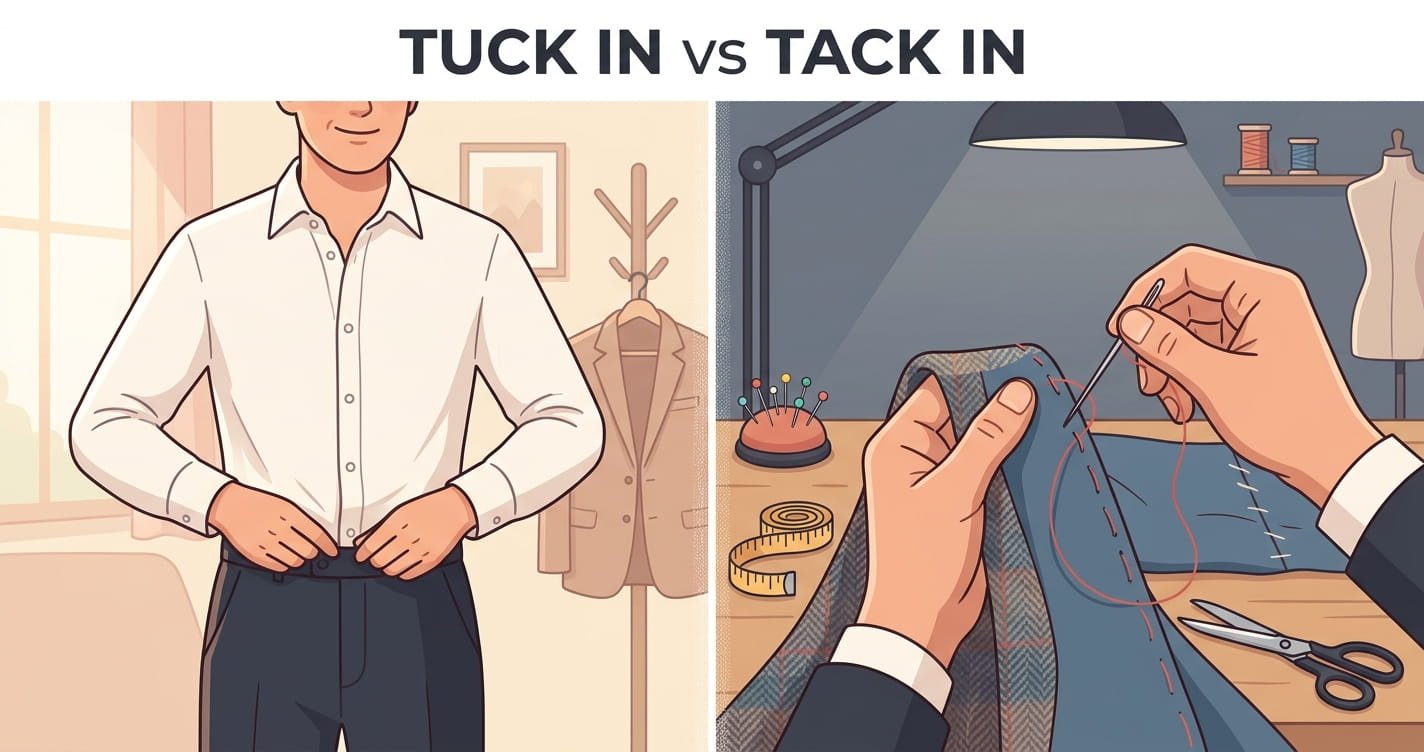
- To fold or push clothing into place Example: He tucked in his shirt before the interview.
- To eat heartily or start eating enthusiastically Example: Dinner is ready — tuck in!
- To make someone comfortable in bed by folding blankets around them Example: She tucked her son in and turned off the light.
- To fit something snugly into a small space Example: The cottage was tucked in between two hills.
“Tuck in” is warm, casual, and frequently used in daily conversation, making it a phrase every English learner should know.
What Does “Tack In” Mean?
“Tack in” is far less common and isn’t a standard, widely recognized phrasal verb in everyday English. However, the word “tack” itself has specific meanings that explain where confusion might arise:
- In sewing/tailoring: “Tack” means to sew something temporarily with loose, large stitches before doing the final, permanent stitching. So “tack in” could describe temporarily securing fabric in place. Example: The tailor tacked in the hem before stitching it properly.
- In sailing: “Tack” refers to changing the direction of a boat by turning its bow through the wind. It doesn’t typically pair with “in,” but sailors might say a boat “tacks” toward a particular point.
- As “tack on” (a related but different phrase): This means to add something extra to what already exists. Example: They tacked on an extra fee at checkout.
Because “tack in” isn’t a fixed idiom, it’s often a mishearing or misremembering of “tuck in.”
Key Differences at a Glance
| Aspect | Tuck In | Tack In |
|---|---|---|
| Common usage | Very frequent, everyday phrase | Rare, mostly technical (sewing) |
| Meaning | Fold in, eat, comfort, fit snugly | Temporary stitching (tailoring context) |
| Tone | Casual, friendly | Technical/niche |
| Example | “Tuck in your shirt.” | “Tack in the fabric before sewing.” |
Which One Should You Use?
For almost all everyday situations — clothing, eating, comforting someone, or describing something fitting into a space — “tuck in” is the correct and natural choice. “Tack in” should only be used in a specific tailoring or sewing context, and even then, “baste” is often the more standard term professionals use.
Conclusion
While “tuck in” and “tack in” may sound alike, they aren’t interchangeable. “Tuck in” is a common, multi-purpose phrase used in daily life, while “tack in” is a rare, specialized term tied to sewing. Knowing this distinction helps you avoid confusion and use English more accurately and naturally.